Display:
Stories

Hardship, told plainly. Help, made specific.

We don't ask you to give to an idea. Each story below ends with the exact thing that student — and students in the same situation — is waiting for. Some names and identifying details are changed to protect our students; the circumstances are not softened.

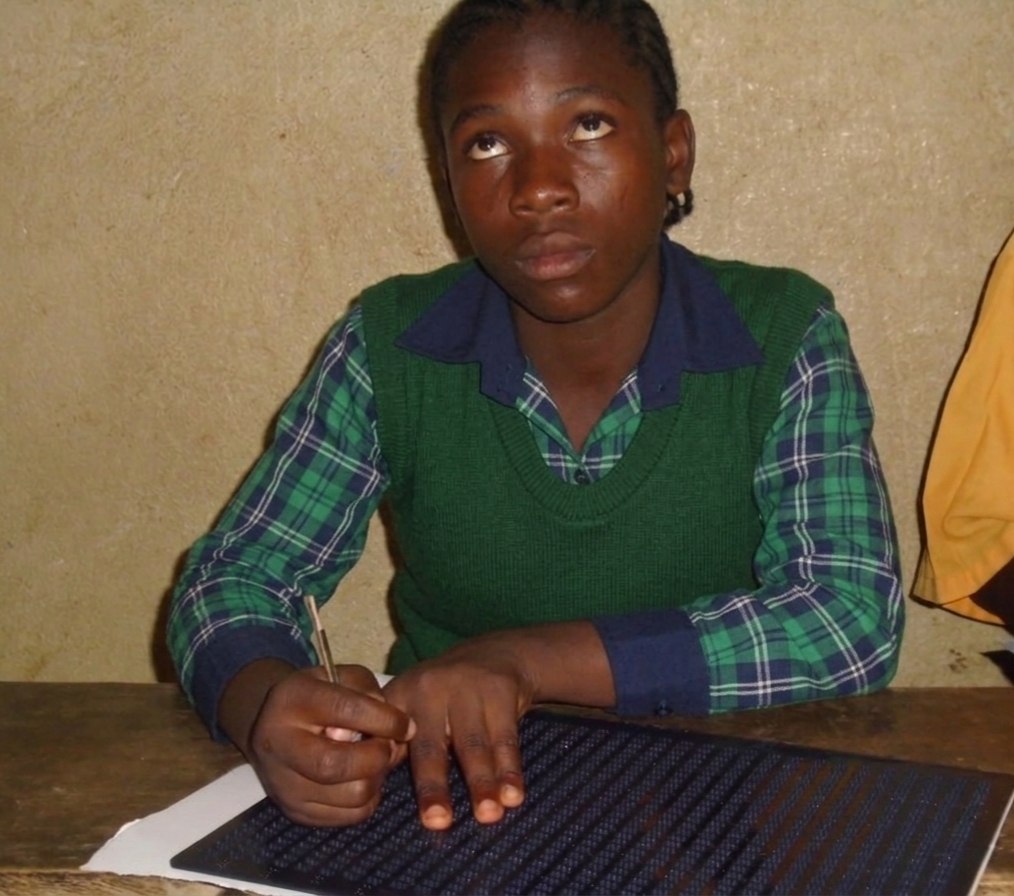
Hana sits at a wooden school desk in a green sweater, her fingers resting on the rows of a braille board.
Hana at her desk. She keeps a pen in her right hand — a habit from the years she copied letters she couldn't see.

Eight years in school. Zero words read.

Hana's sight began fading when she was six. Nobody called it blindness for a long time — she was called slow, then lazy, then quiet. She learned to survive class by memory: she can still recite entire lessons she has never read, because listening was the only door left open.

What she couldn't do was read or write. Her school had no braille materials, and no one on staff had ever taught a blind student. Her parents were told, kindly and more than once, that it might be better to keep her home.

The first word she read with her fingers was her own name. She was fourteen. It took her under a week to learn the alphabet — the wait, not the learning, had taken eight years.

A volunteer teacher in our network brought a slate and stylus to her school last year. That is the whole intervention. A piece of equipment that costs less than a textbook, and one adult who knew how to use it.

Hana wants to be a lawyer. Her school now has three blind students and one slate between them.

Liya, a toddler with red bows in her hair, wears her first pair of round pink glasses and looks straight at the camera.
Liya, on the day she got her first pair of glasses.

The world arrived when she was three.

Liya's mother knew something was wrong before anyone else believed her. Her daughter held toys against her nose. She reached for faces and missed. At the market she cried, overwhelmed by a blur she had no words for.

The nearest eye exam for a child her age was a day's travel and more than a week's income away. So, like most families in her situation, they waited — because that is what you do when every option costs money you don't have.

A child's brain learns to see in its first years. Every month a severe prescription goes uncorrected is vision that may never fully come back.

Liya was seen at one of our community screening days. Her prescription was strong enough that the optometrist checked it twice. Two weeks later she put on her first pair of glasses — pink, her choice, non-negotiable — and went silent, staring at her mother's face.

Children's glasses break, and children's eyes change. Liya will need new lenses roughly every year of her childhood. That is the part no one budgets for, and the part we cover.

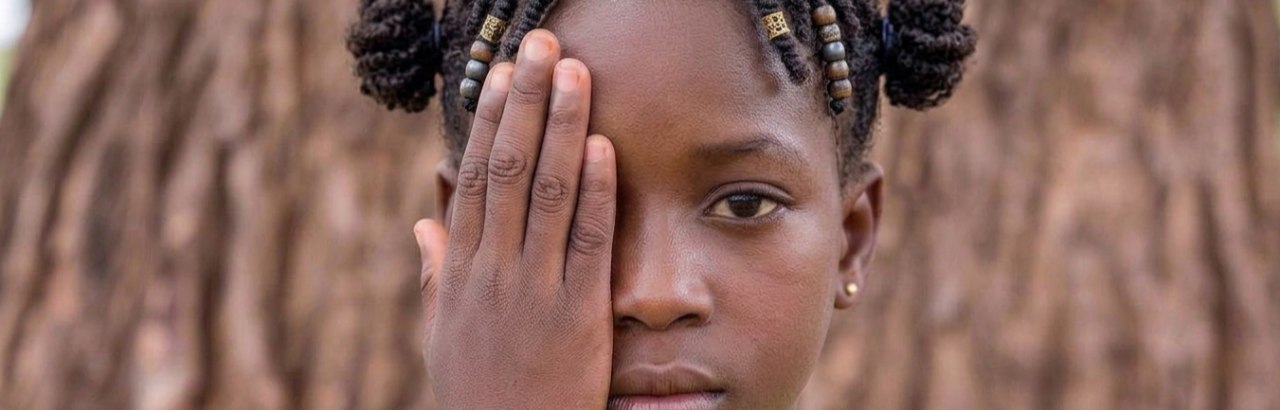
A girl covers one eye with her palm during a school vision screening, her other eye steady on the chart.
One eye at a time: a screening in progress.

The "slow learners" who simply couldn't see the board.

At the first school screening we ran, teachers gave us a list of the students they were worried about — the ones failing, the ones who had stopped trying. By the end of the day the pattern was impossible to ignore: a large share of the "weak students" had never clearly seen a blackboard in their lives.

No one had failed them on purpose. A teacher facing sixty children cannot diagnose why one of them squints. A parent who has never had an eye exam doesn't think to ask for one. The children themselves assumed everyone saw the world the way they did — blurred, and from the front row if they were lucky.

A screening costs a few dollars per child and takes minutes. Undetected, poor vision quietly takes the whole education instead.

A screening day finds the children who need glasses, the ones who need medical referral, and — most urgently — the ones losing their sight who need to start braille and mobility training now, while it can still shape their schooling instead of ending it.

Where it's needed most

Can't choose? Neither can we.

A gift to the general fund lets us move money to whichever student, school, or screening day needs it that week. It is the least glamorous way to give and often the most useful one.